
By Louise Missen | Head of Member Services, Australian Payroll Association
The Fair Work Commission has delivered a landmark ruling that will phase out junior pay rates for adult workers in key modern awards, beginning a major shift in how employers handle wage classifications for younger employees. This change will have significant implications for payroll operations, cost forecasting and compliance processes across Australia.
What’s changing
Under the current framework, junior employees usually those under 21 years old are paid a percentage of the relevant adult minimum rate under many modern awards. For example, a 19 year old covered by the General Retail Industry Award currently receives 90% of the adult rate while a 17 year old may receive only 60%.
The new decision abolishes these “junior” rates once a worker turns 18, meaning that all employees considered adults under the law will now be entitled to the full adult rate of pay. The ruling primarily affects industries such as retail, fast food and hospitality, where younger workers make up a considerable proportion of the workforce.
Phased implementation
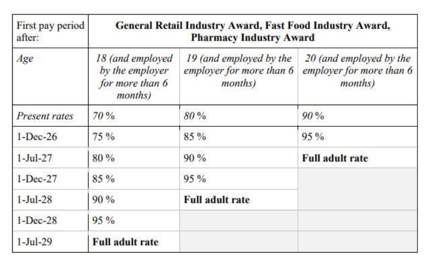
To reduce disruption for both workers and businesses, the Commission has proposed a transitional implementation period of up to four years. The adjustment will occur in increments of five percentage points every six months, progressively lifting the minimum pay rate for adult junior workers until it reaches parity with the adult rate.
This gradual approach is designed to smooth potential impacts on youth employment and allow employers time to adjust their labour cost structures, budgets and systems.
What payroll teams should prepare for
Payroll professionals will play a central role in ensuring compliance and a smooth transition during this phased rollout. Key actions include:
- Award review: Identify which employees and classifications within your organisation are affected by the abolition of junior rates.
- System updates: Work with payroll software providers to ensure rate tables and employee classifications reflect transitional adjustments as they roll out.
- Communication plans: Coordinate with HR/the business to inform managers and employees of upcoming pay changes transparently and in advance.
- Budget forecasting: Model the financial impact of progressive rate increases over the four-year period to support business planning.
- Compliance checks: Monitor Fair Work Ombudsman and Fair Work Commission updates for each stage of implementation to ensure accuracy.
Why It Matters
This decision marks a significant move towards pay equity for younger workers while recognising the employment challenges faced by businesses that rely heavily on youth labour. For payroll teams, it emphasises the critical need for accurate, proactive award interpretation and automation readiness.
Being ahead of these changes will not only ensure compliance but also build trust within your organisation as a reliable source of payroll governance and legislative expertise.
Stay compliant and confident by attending the Understanding Modern Awards course and other Award specific training programs with the Australian Payroll Association. These sessions are designed to help payroll professionals interpret award provisions, anticipate legislative changes and apply them accurately in payroll systems and processes.