By Ross Heron | CEO, Australian Payroll Association
Voice of Confidence | Episode 5 of 7 | Marc Washbourne, Co-founder and CEO, ReadyTech
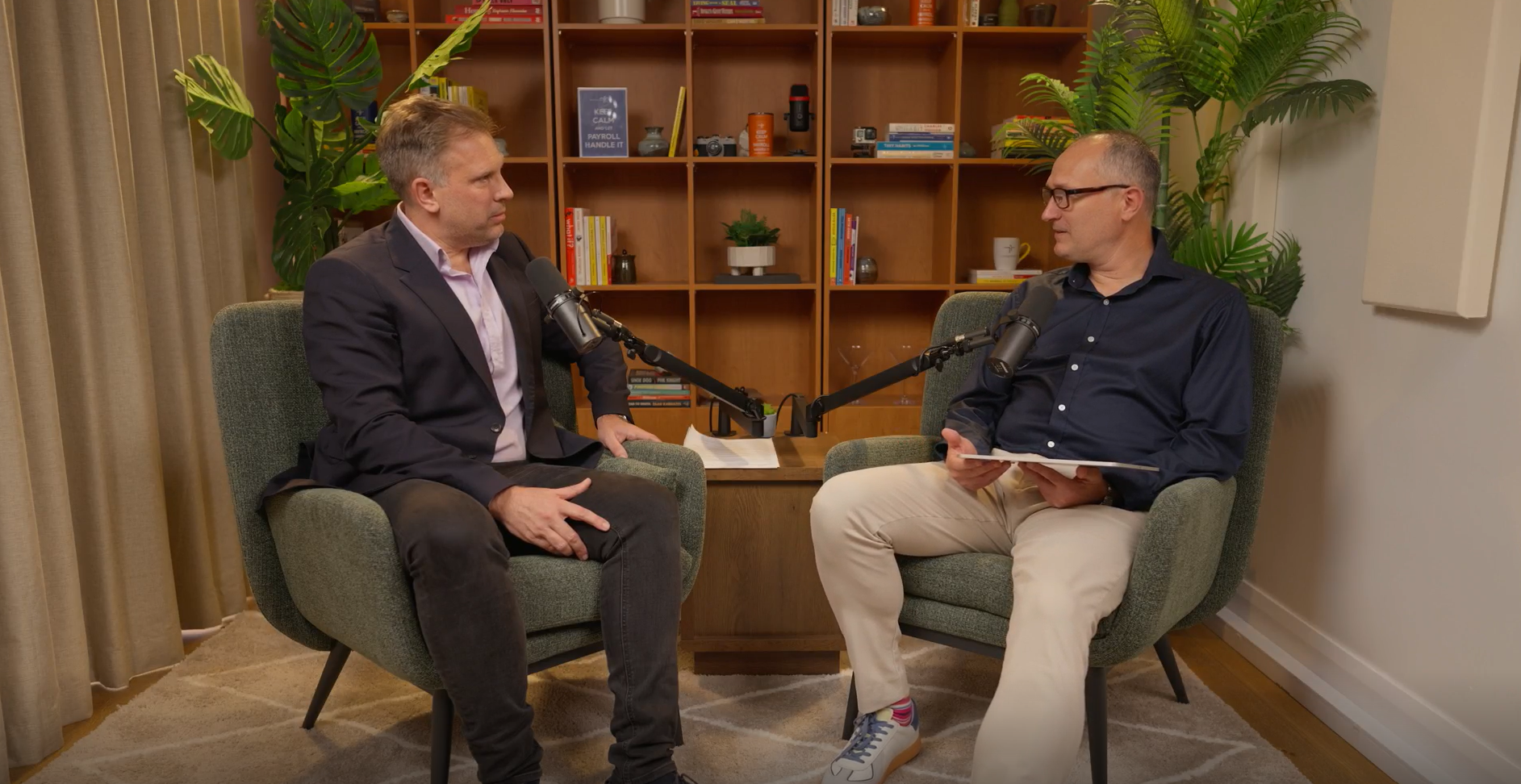
Ross Heron sits down with Marc Washbourne on why payroll deserves a seat at the leadership table.
There is a conversation that plays out in organisations across Australia more often than it should. Someone in leadership refers to payroll as “back office.” The payroll team hears it, again, and quietly gets on with making sure several thousand people are paid correctly by Friday.
According to the 2026 Australian Payroll Industry Report, 35.1% of payroll professionals say that leadership and management not understanding payroll is one of their top challenges. It’s hard to protect a function that the people at the top don’t fully appreciate.
That’s why my conversation with Marc Washbourne hit differently. Marc is the co-founder and CEO of ReadyTech, an ASX-listed technology company that works across education, government, employment and workforce management. He founded the business in 1999 and has led it ever since. And his view on payroll is one I think every CEO needs to hear.
He also makes a bold prediction: within 12 months, every payroll team will have a new team member.
Built for the complicated bits
ReadyTech serves around 4,000 customers. In the workforce space, they’ve focused on what Marc calls the “stand-up economy”: large workforces with serious complexity around rostering, shifts, time and attendance, awards and pay.
“We’ve spent a long time really honing the product for the realities of those sectors, as opposed to building something that’s more generic in nature.”
This isn’t a company that built something neat in a lab and went looking for buyers. It’s one that sat with the complexity and stayed. That matters, because the sectors ReadyTech serves are ones where getting payroll wrong has real consequences for real workers.
Compliance has to come first
One of the things that struck me about Marc is how deeply compliance runs through ReadyTech’s culture. Not as a checkbox, but as an organising principle.
“We’ve always had this philosophy that compliance has to be priority number one. If the rules shift, other things have to go secondary.”
That philosophy extends across every vertical ReadyTech operates in. Tertiary education, government, employment services: all heavily regulated. Marc made the point that compliance isn’t just a payroll concern. It’s in the DNA of the entire organisation.
He pointed to Payday Super as a case in point. For ReadyTech, preparing for Payday Super wasn’t just about updating the system. It was about helping customers manage the change: new work processes, exception handling, cash flow impacts. That’s a broader view of compliance than most technology providers take, and it reflects what our 2026 survey found: 52.8% of payroll professionals cite compliance risk as their biggest concern about the Payday Super transition.
ReadyTech has built dedicated compliance teams whose job is to stay connected to policymakers and to organisations like ours. Marc’s phrase was about anticipating early and supporting customers to manage the change effectively. That’s compliance as partnership, not just product.
How confident are we, really?
I asked Marc what questions CEOs should be asking about their payroll and workforce management operations. His answer reframed the entire conversation.
“I think the shift we need to see is to see less payroll as a back office process and more as critical workforce infrastructure based on trust. It’s one of the most important promises we make to our workforce: that we’ll pay our people on time and correctly.”
Think about that for a moment. Not the mission statement on the wall. Not the values page on the website. The pay run. That is the promise. And Marc’s specific questions for leadership cut right to the heart of it: How confident are we that we’re getting things right? Not broadly, but across leave, allowances and superannuation. How resilient is the operation? And the one that should make a few people uncomfortable: how much of our payroll process lives in spreadsheets, workarounds and in the head of one person?
When the process lives in someone’s head
That last question deserves its own moment. Every payroll team knows the feeling. There is one person who understands the quirks of the system, the manual adjustments, the workaround for the thing that never got fixed. When that person is on leave, everyone holds their breath.
Marc didn’t use the phrase “key-person risk,” but that’s exactly what he was describing. And it’s a risk that sits outside any technology platform. It’s an operational question that leadership needs to own. If the entire pay run depends on one person’s knowledge of where the spreadsheets are and which workaround applies to which award, that’s not a payroll problem. That’s a business continuity problem.
Staying close as you scale
Marc arrived in Australia with a backpack. He’d taught himself to code in London and met someone with an idea to build a product. They built it together. Nearly 30 years later, ReadyTech is publicly listed and Marc is still at the helm.
I asked him how his leadership approach has changed over that time.
“In the early days, I thought leadership was about being close to all the really important decisions and having the answers. That can work pretty well when the team is around one table. But as you scale, the leader starts to become a bottleneck.”
His view now: the job of leadership is to set the vision, create clarity, set high standards and make sure capable people are close to the customer and the customer’s problems. That’s a shift a lot of growing businesses struggle with. And it’s a good reminder for payroll leaders too: sometimes the best thing you can do for your team is stop being the only person who knows how everything works.
What hasn’t changed, he said, is customer proximity. Listening closely and staying close to customers as you scale. It’s something he’s tried to build into the DNA of the organisation, and you can feel it when you talk to his team.
Keep building
There’s a line from Marc that stuck with me after we wrapped up. He said he never had grand designs to run a large ASX-listed company.
“Founders just want to keep building. The curiosity remains.”
After nearly 30 years, that curiosity is still what drives him. And it’s a good reminder that the best technology doesn’t come from people trying to sell you something. It comes from people who are genuinely curious about the problem.
What this means for you
- Payroll professionals: Use Marc’s CEO questions as a conversation starter with your leadership. How confident are we? How resilient? Where does the process rely on one person?
- Bookkeepers and accountants: If Payday Super readiness is still a work in progress, focus on exception handling and onboarding data accuracy first. Those are the operational levers that matter most.
- HR professionals: Data governance is a shared responsibility. Partner with payroll on Payday Super readiness, particularly around employee data, fund details and change controls.
- Finance professionals: Payroll resilience is a financial risk. If the process breaks when one person is away, that’s a risk your CFO needs to know about.
- Payroll compliance officers: Marc’s approach to compliance as an organising principle, not a bolt-on, is worth reflecting on. Where does compliance sit in your organisation’s priorities?
Watch the full conversation
This is only half the story. In the full video, Marc also talks about:
- Orchestra and AI: How ReadyTech is using AI agents to give payroll teams new tools for data interrogation, exception handling and continuous assurance.
- The payroll agent prediction: Marc’s bold 12-month forecast that payroll teams will have a new team member called a payroll agent, and what that means for the profession. Marc’s bold 12-month forecast for the newest member of every payroll team, and what it means for your role.
- The robotaxi moment: A story about adapting to change that perfectly captures why the future of payroll might arrive faster, and more comfortably, than you think. Why one robotaxi ride changed how Marc thinks about payroll’s future, and why it may arrive sooner than you think.
Watch Episode 5 of Voice of Confidence with Marc Washbourne
This is the fifth of seven Voice of Confidence conversations with leaders shaping Australian payroll. Sign up to Payroll News at austpayroll.com.au/newsletter-sign-up so you don't miss the next one.
Voice of Confidence is the Australian Payroll Association’s leadership series, featuring conversations with the people shaping the future of payroll in Australia.